HydroGo
2026 | 3 Weeks | Exploring Identity
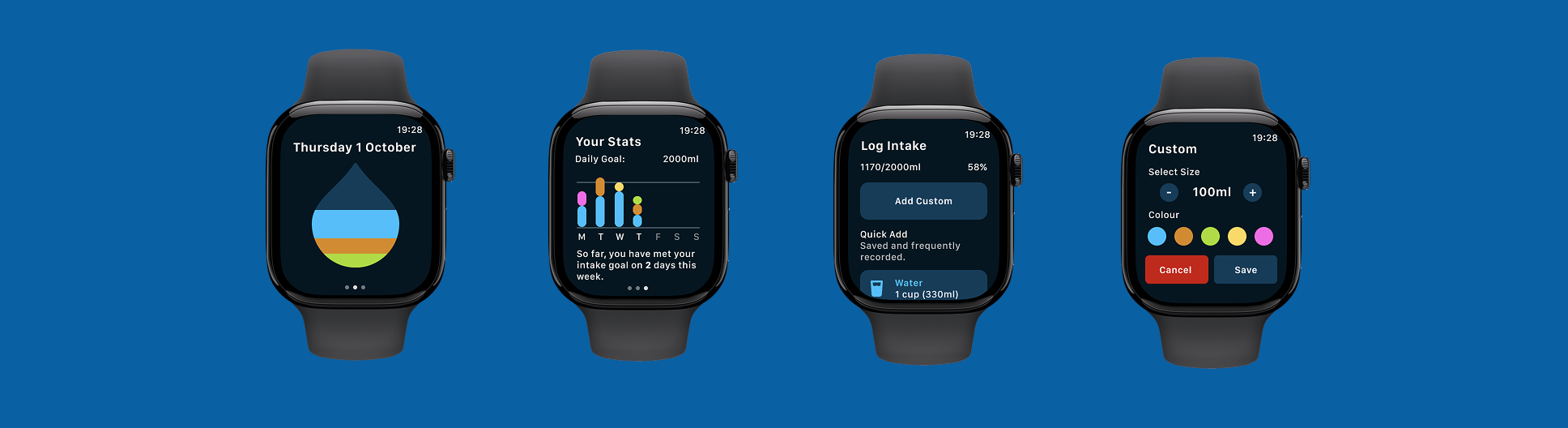
HydroGo is a smartwatch app which offers fast hydration tracking for management on the go. Even for the busiest of people, HydroGo can make ensuring proper hydration and reaching individual goals an easy aspect of day-today life regardless of daily distractions.
Project Brief & Overview
I was tasked with creating a smartwatch app prototype with three main screens. As there was no predetermined audience, I had the freedom to create something that appeals to a broad audience.
I chose to focus on hydration tracking, exploring how a smartwatch app could assist with managing beverage intake and reaching daily hydration goals. Maintaining good hydration habits and reaching recommended goals can be challlenging, especially when balancing a busy life with other responsibilities. My aim was to combat this my making hydration management effortless and accessible through a smartwatch app.
As a solo project, I had a wide range of responsibilities throughout the design process, from initial research to prototyping. With a relatively short timeline of three-weeks, careful time management and prioritisation of tasks was vital to ensure that I would reach my goal within the timeline.
One of the main challenges of this project was finding the right balance between simplicity and functionality. I wanted to offer enough features to meet user needs and functionality, without it becoming overwhelming or complex to use.
Research
I kickstarted this project with research, mainly though competitor analysis. With smartwatch usage continuing to grow, the market for these apps is increasingly competitive. I investigated competing apps, including Strava, Headspace, Todoist to investigate a wide scope of UIs and audiences. I also analysed reviews of each of these to identify the strengths and weaknesses that real life users identify.
It was clear that complexity of interfaces can make using an app feel unnessescary and time consuming. Particularly for smartwatch apps, users want something that fits seamlessly into their everyday life and doesn’t require much time or cognitive effort to use. Glanceability supports this, as users can interpret an interface at one quick look. This research shapes one of my key aspirations for my project outcome, to create a product that can be easily integrated into everyday life while providing benefits to users quality of life.
Ideation
My ideation began with creating a large mind map of a few different genre ideas. Using alogical connections, I identified a connection between water and support. Further exploration of this concept led to the idea of an app to manage and support hydration.
I’m interested in creating things that solve real-life problems, so I wanted to create something that would both be beneficial and enjoyable for the end user and avoid seeming like a chore. Further competitor analysis helped me to develop this idea further to understand what existing competitors there are, and identify user frustrations and potential improvements. Two key issues were highlighted in my research. Users find these apps easy to forget about, particularly when these apps give little motivation or drive to reach a goal. I also noted user frustrations with apps that don’t allow tracking of other beverages aside from water, failing to consider their contribution to hydration.
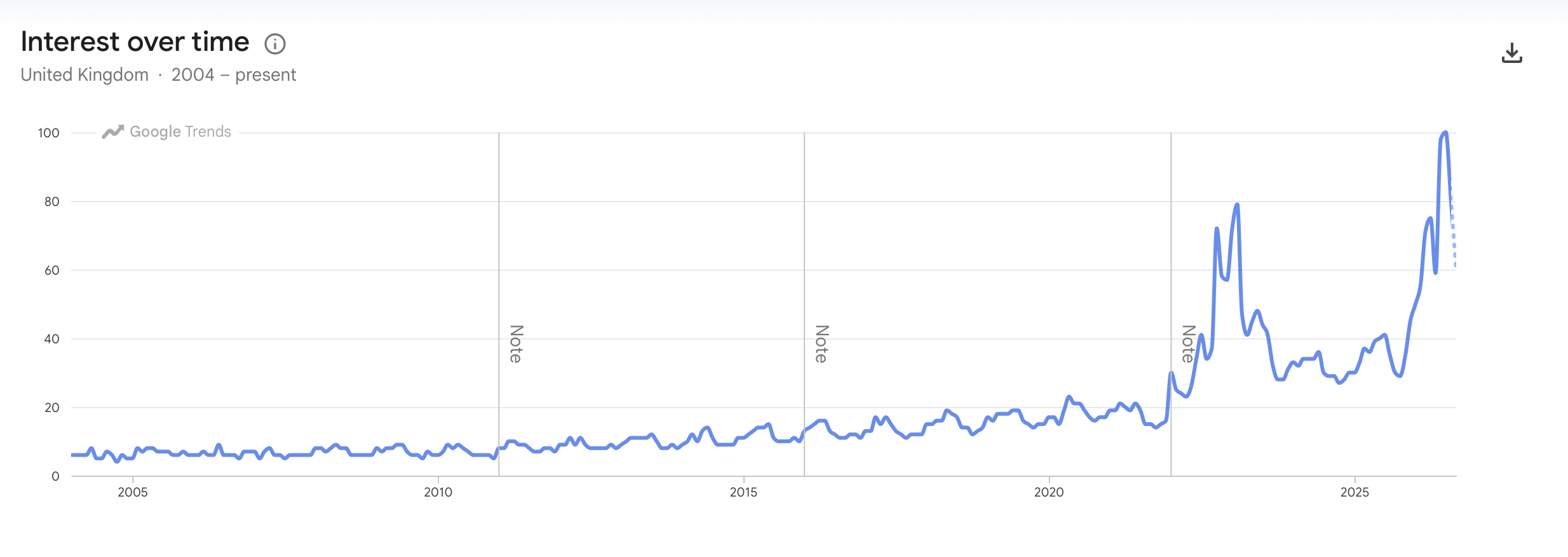
Analysis of google trends highlighted how the demand for hydration management and general concern with the topic has skyrocketed in recent years.
Concept and Audience
I established a concept of a smartwatch app that allows for easy tracking of whatever people drink throughout the day. I established a target audience of young adults (18-39), as this is the demographic that are new to the university, work and adult life, and may not have time to think about proper hydration whilst managing other responsibilities.
Design Process
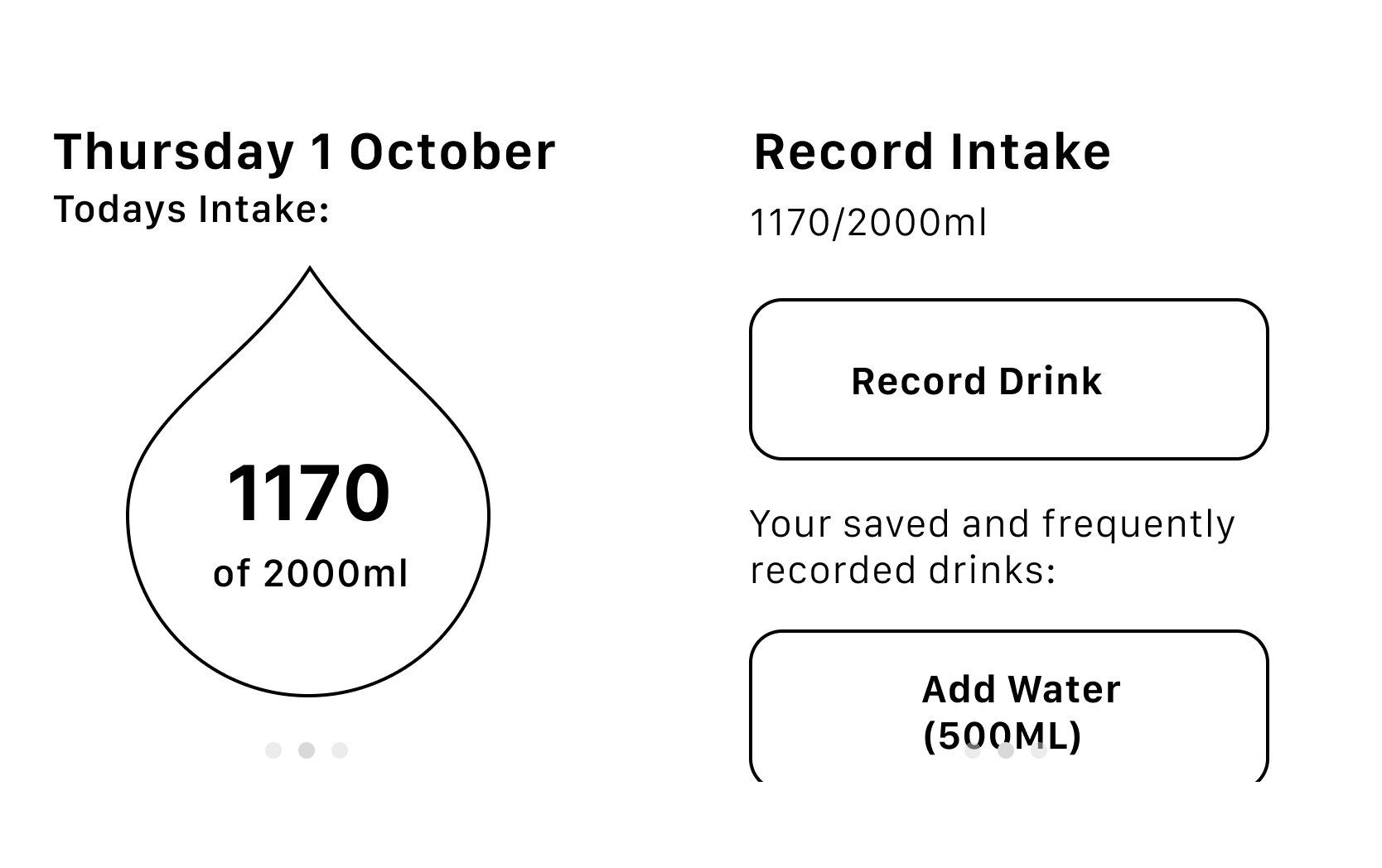
A series of sketches were produced in order to experiment with a wide range of possible outcomes. This stage was pivotal to supporting further idea generation as several sketches of different UI concepts and screens were produced, giving a clear idea of my desired layout and flow. Translating my strongest sketches into digital wireframes bought my concepts to life and highlighted the format and structure that was the strongest for my project.
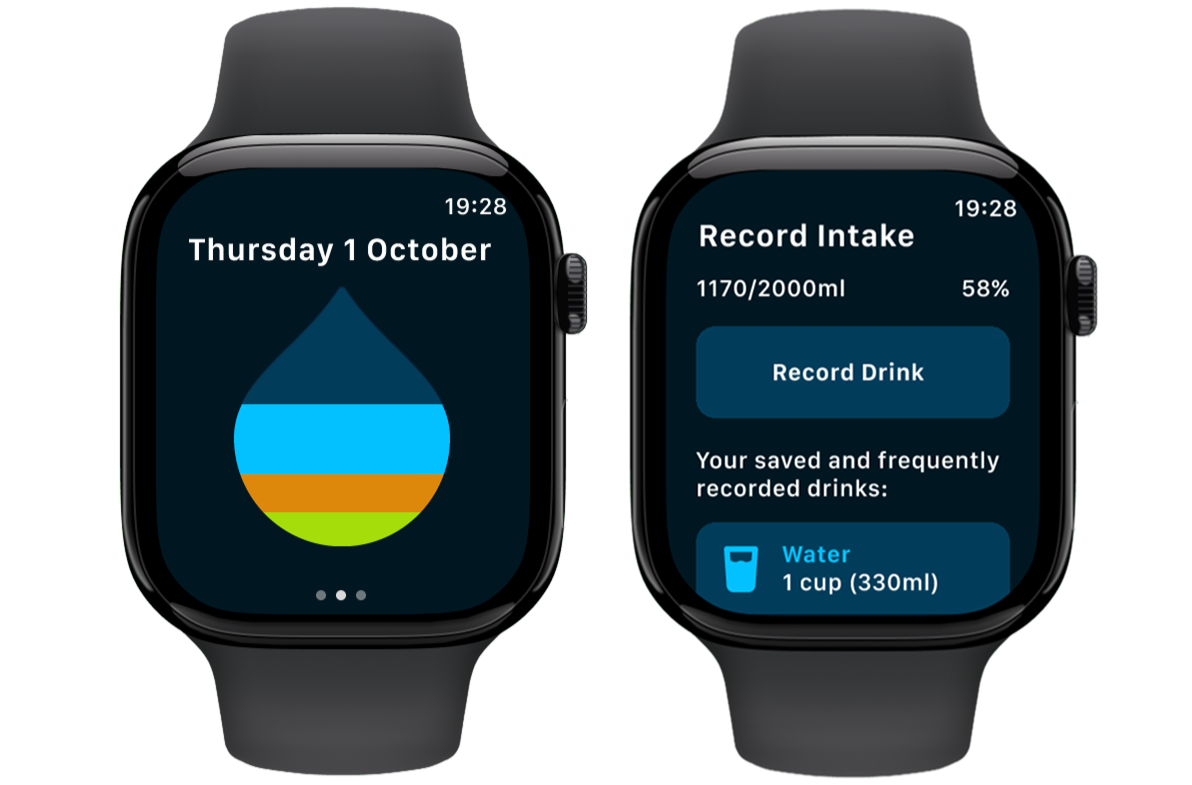
Prototyping was one of the most rewarding aspects of this project. Translating my initial wireframes into low-fidelity and high-fidelity interfaces allowed me to bring my concept into a functional interface, focus on user experience, and ensure the final designs aligned with my ambitions.
I received positive feedback from my peers, alongside some constructive feedback. Changes I made from this included adjusting colours to improve contrast and accessibility and making the process of recording intake more efficient.
Visual Identity
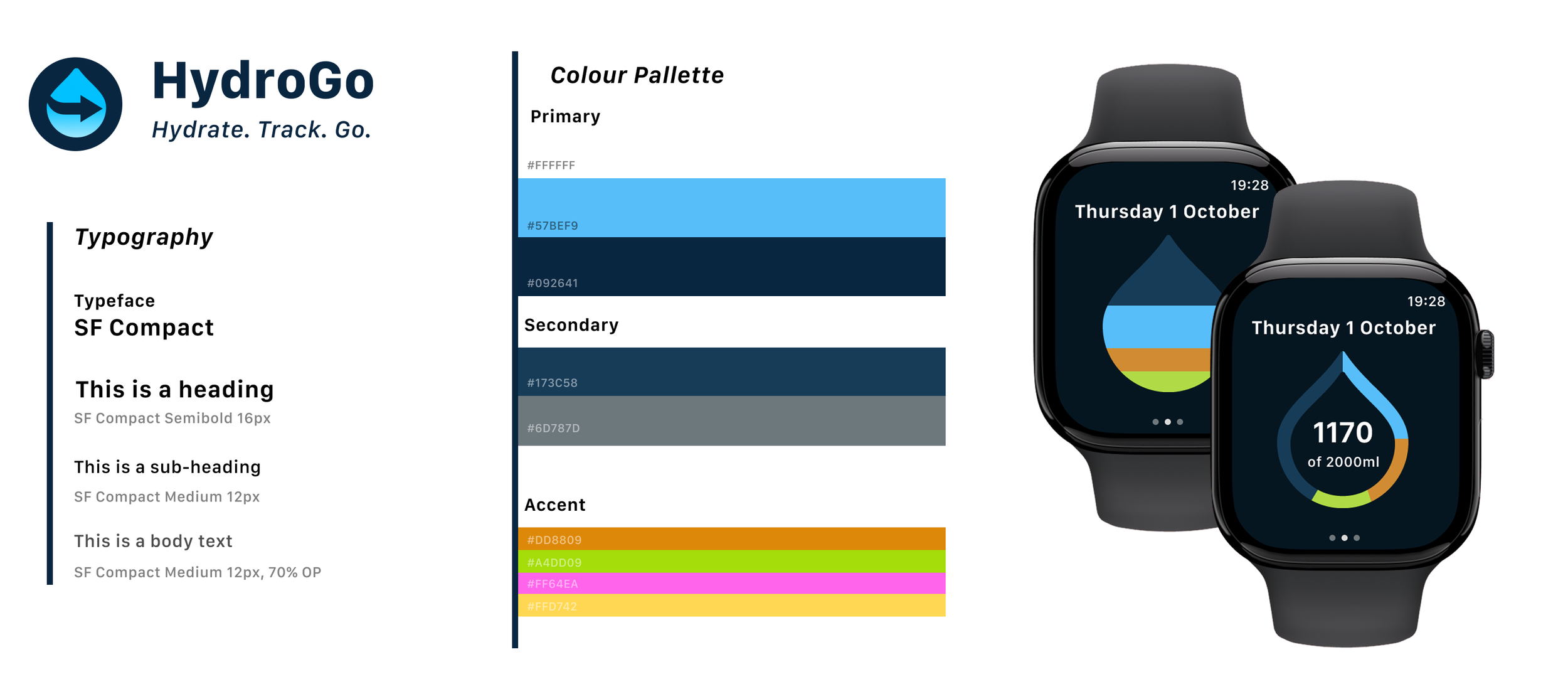
HydroGo’s visual identity reflects the freshness and cleanest of hydration, while ensuring clarity and accessibility. A clean typeface SF Compact enhances readability, and vibrant accent colours bring personality to the brand. Each element of visual identity harmonies with each other to create a cohesive, strong brand image.
Project Outcome
This project was an exciting oppourtunity to explore my approach to UI design in a different way to previous projects. It allowed me to explore visual identity and user experience can work together to create an innovative product. By addressing the everyday challenge of hydration management, I gained a deeper understanding of how design can tackle real-life problems.
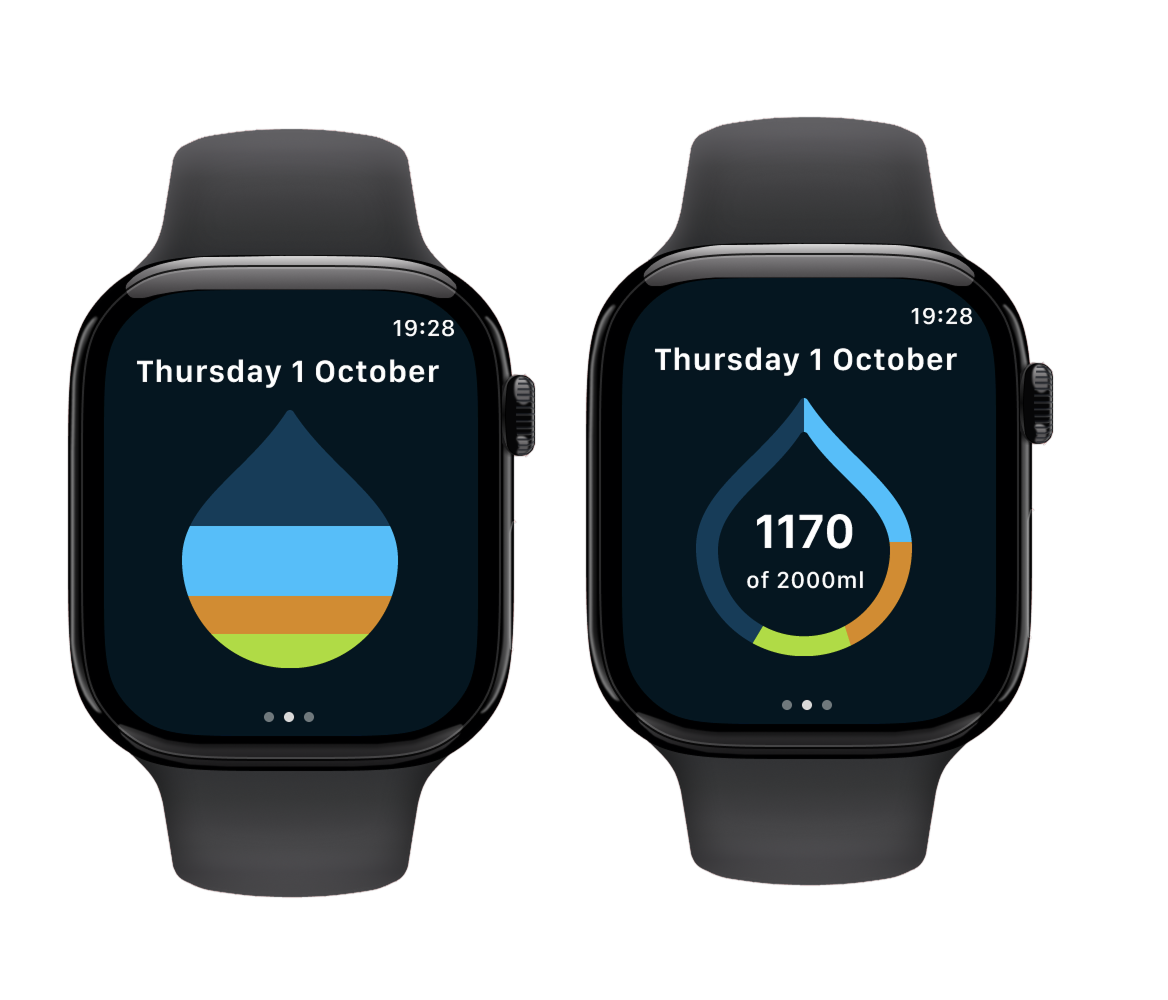
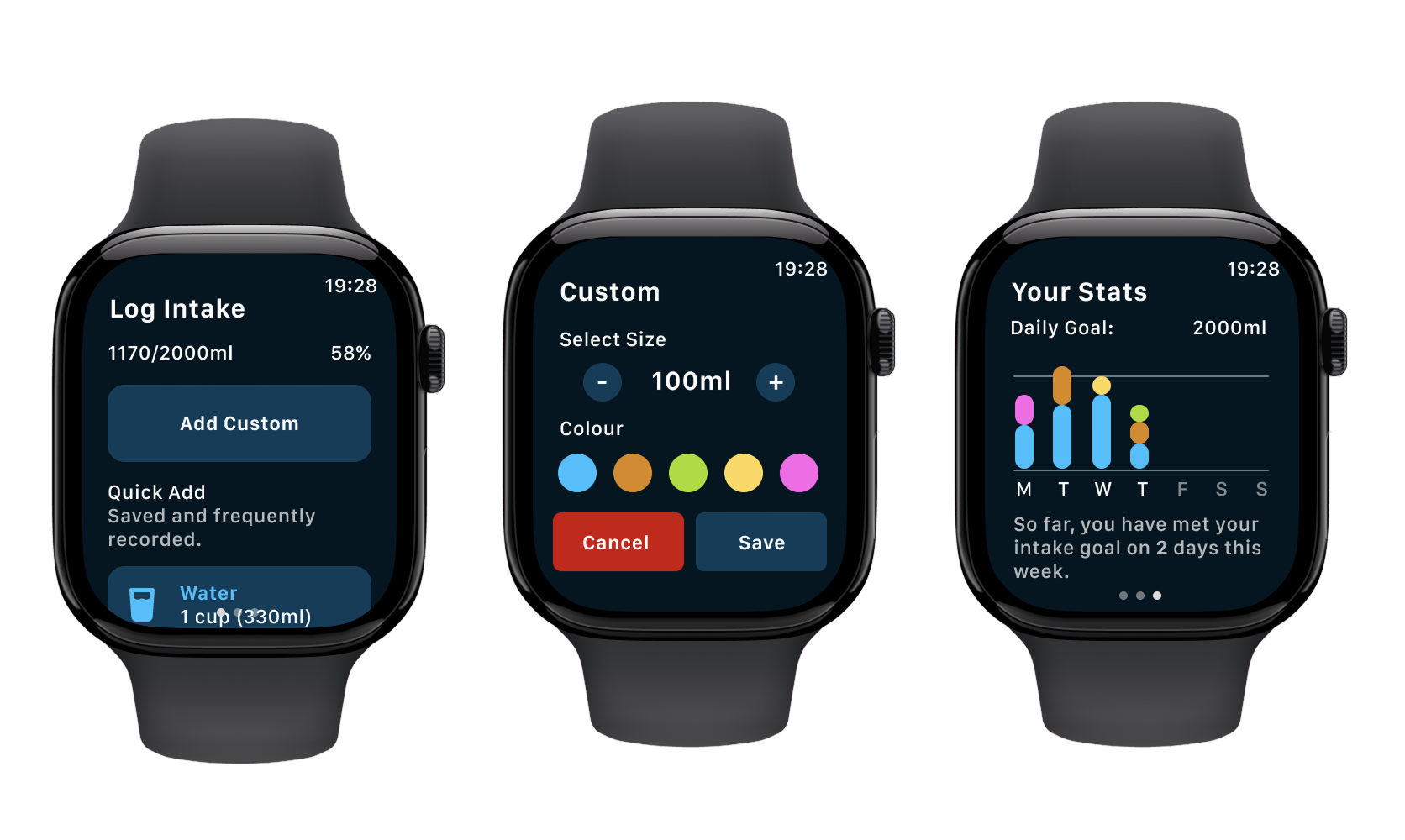
Explore the interactive prototype or read more about the process in my project blog.